Why Vietnam Is Becoming a Strategic Manufacturing Hub for Pet Products
Is Vietnam the right place to manufacture your next pet product?
For years, China has played a major role in global pet product manufacturing. From rubber dog toys and silicone feeding accessories to plastic pet products, international brands have relied on established Asian manufacturing networks.
But global sourcing strategies are changing.
Today, more businesses are evaluating Vietnam as an additional manufacturing location to diversify supply chains, manage sourcing risks, and develop long-term production partnerships.
However, moving production to a different country is not simply about finding a factory with a lower quotation.
The real question is whether a manufacturer can deliver the right combination of technical capability, consistent quality, production capacity, and commercial reliability.
Let’s explore what pet brands should know about OEM and ODM pet product manufacturing in Vietnam.
1. Why Is Vietnam Attracting International Manufacturers?
Vietnam has developed into an important export-oriented manufacturing economy.
According to the World Bank, Vietnam’s GDP grew by 8% in 2025, supported by manufacturing exports, domestic demand, and investment.
This wider industrial development creates opportunities for international buyers evaluating alternative sourcing locations.
For pet brands, Vietnam can be a relevant manufacturing destination for selected product categories, including:
- Rubber dog toys and enrichment products.
- Silicone feeding mats, bowls, and accessories.
- Plastic feeding and storage products.
- Customized molded pet accessories.
- Private-label pet products developed for international markets.
Yet not every Vietnamese factory specializes in these products.
Buyers should evaluate the actual materials, equipment, engineering resources, and quality systems of each potential manufacturing partner.
2. The China Plus One Strategy: Why Pet Brands Are Diversifying
One of the main reasons companies explore Vietnam is the China Plus One sourcing strategy.
Rather than relying entirely on one manufacturing country, brands develop additional production options to improve supply chain flexibility.
This does not necessarily mean replacing existing Chinese suppliers.
Instead, a company may maintain manufacturing relationships in China while developing additional capacity in Vietnam.
For international pet brands, potential benefits include:
Supply chain diversification
Having qualified manufacturing options in multiple countries can reduce dependence on one production location.
Greater sourcing flexibility
Brands can evaluate different production locations based on product specifications, capacity, lead times, and commercial requirements.
Long-term supply chain planning
A multi-country manufacturing strategy can provide additional options when trade conditions, logistics, or production requirements change.
However, setting up production in another country introduces its own challenges.
Tooling, material sourcing, engineering coordination, quality validation, and shipment planning must all be considered.
A successful China Plus One strategy is not simply about changing the country of origin. It is about building a reliable second manufacturing capability.
3. Can Vietnam Manufacture High-Quality Pet Products?
One common concern among international buyers is whether Vietnamese manufacturers can meet the quality expectations of established global pet brands.
The important point is that product quality is not determined by manufacturing location alone.
It depends on several factors:
- Material specifications.
- Product engineering.
- Manufacturing equipment.
- Process control.
- Workforce training.
- Quality management.
- Inspection and testing requirements.
Consider a rubber dog toy.
Two factories may manufacture products with nearly identical appearances, but the finished products can differ in elasticity, tear resistance, hardness, dimensions, and production consistency.
These differences depend on the actual product formulation, manufacturing process, and quality requirements.
The same applies to silicone feeding products and plastic pet accessories.
When evaluating a pet products manufacturer in Vietnam, international buyers should focus on the factory’s ability to meet clearly documented specifications.
A professional supplier should be prepared to discuss technical requirements and how those requirements will be verified during production.
4. Rubber, Silicone, and Plastic Manufacturing in Vietnam
Different pet product categories require different manufacturing capabilities.
For brands developing molded pet products, understanding the manufacturer’s material expertise is particularly important.
Rubber Pet Product Manufacturing
Rubber can be used for a variety of flexible pet products, including dog balls, chew toys, and selected enrichment accessories.
Manufacturing considerations include material hardness, elasticity, tear resistance, mold design, and dimensional consistency.
The selected rubber formulation must be appropriate for the intended application.
A product designed for fetching may require different performance characteristics from one intended for sustained chewing.
Silicone Pet Product Manufacturing
Silicone is commonly considered for flexible pet-care and feeding accessories.
Depending on the material grade and product design, applications may include feeding mats, collapsible bowls, grooming products, and selected toys.
Important considerations include material suitability, hardness, surface finish, temperature resistance, and manufacturing consistency.
For food-contact applications, brands must also verify relevant material and regulatory requirements.
Plastic Pet Product Manufacturing
Plastic injection molding supports a wide variety of pet accessories.
Examples include feeding products, storage containers, grooming components, and other functional pet products.
Manufacturing quality depends on resin selection, mold design, molding parameters, dimensional control, and finishing.
A supplier experienced in these material categories may help brands evaluate different manufacturing approaches during product development.
5. What Should You Look for in a Vietnamese OEM Pet Products Factory?
Before choosing a manufacturing partner, international buyers should consider more than pricing.
A. Technical and Engineering Capabilities
Can the factory review drawings, discuss material choices, and identify potential manufacturing problems?
For custom products, engineering support can help prevent design issues before tooling and mass production.
B. Tooling and Product Development
Does the manufacturer have access to mold design, tooling development, and prototype sampling resources?
Clear communication about tooling ownership, design revisions, and sample approvals is essential.
C. Quality Control
Ask how the factory manages incoming materials, production parameters, finished-product inspections, and nonconforming products.
Buyers should also clarify which product-specific test reports are available or required.
D. Production Capacity
The factory should have appropriate capacity for the proposed project.
Buyers need to consider order quantities, production scheduling, customization requirements, and expected lead times.
E. Communication and Project Management
An experienced OEM partner should communicate technical issues, production milestones, and changes to agreed specifications clearly.
Transparent communication is particularly valuable for overseas customers managing product launches.
F. Export and Logistics Experience
International manufacturing involves more than producing goods.
Packaging, shipping documentation, Incoterms, product classification, and destination-market requirements all affect the purchasing process.
The supplier and buyer should establish clear responsibilities before production begins.
6. Is Manufacturing in Vietnam Always Cheaper?
This is one of the most important questions for sourcing managers.
The answer is no.
Vietnam is not automatically the cheapest manufacturing location for every pet product.
Actual manufacturing cost depends on material sourcing, product design, tooling, production volume, process efficiency, quality requirements, and logistics.
For example, a highly specialized material or component may need to be imported.
A project may also involve additional tooling investment or production validation.
Consequently, a lower labor cost does not necessarily translate into a lower total product cost.
Pet brands should compare quotations based on equivalent product specifications and consider the total landed cost.
This includes relevant manufacturing, testing, packaging, freight, and import-related expenses.
Importantly, manufacturing in Vietnam does not automatically guarantee preferential tariff treatment. Applicable duties and origin requirements depend on the product, manufacturing process, destination country, and current trade rules.
The right sourcing decision should balance cost, quality, delivery reliability, and long-term supply chain objectives.
7. How GHD PET Supports OEM and ODM Pet Product Manufacturing in Vietnam
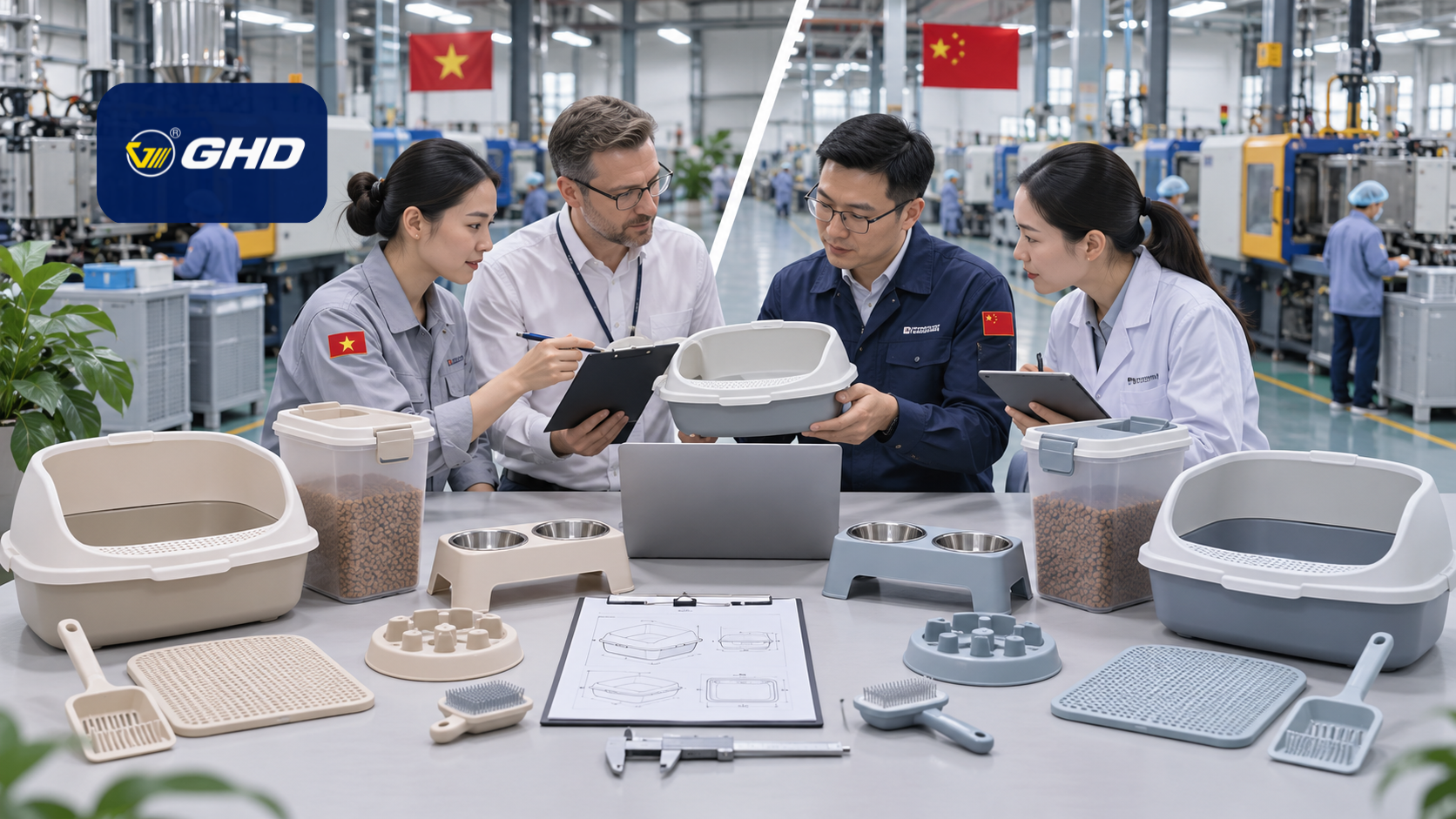
GHD PET is an OEM and ODM pet product manufacturer with manufacturing operations in Vietnam and engineering resources across its broader manufacturing network.
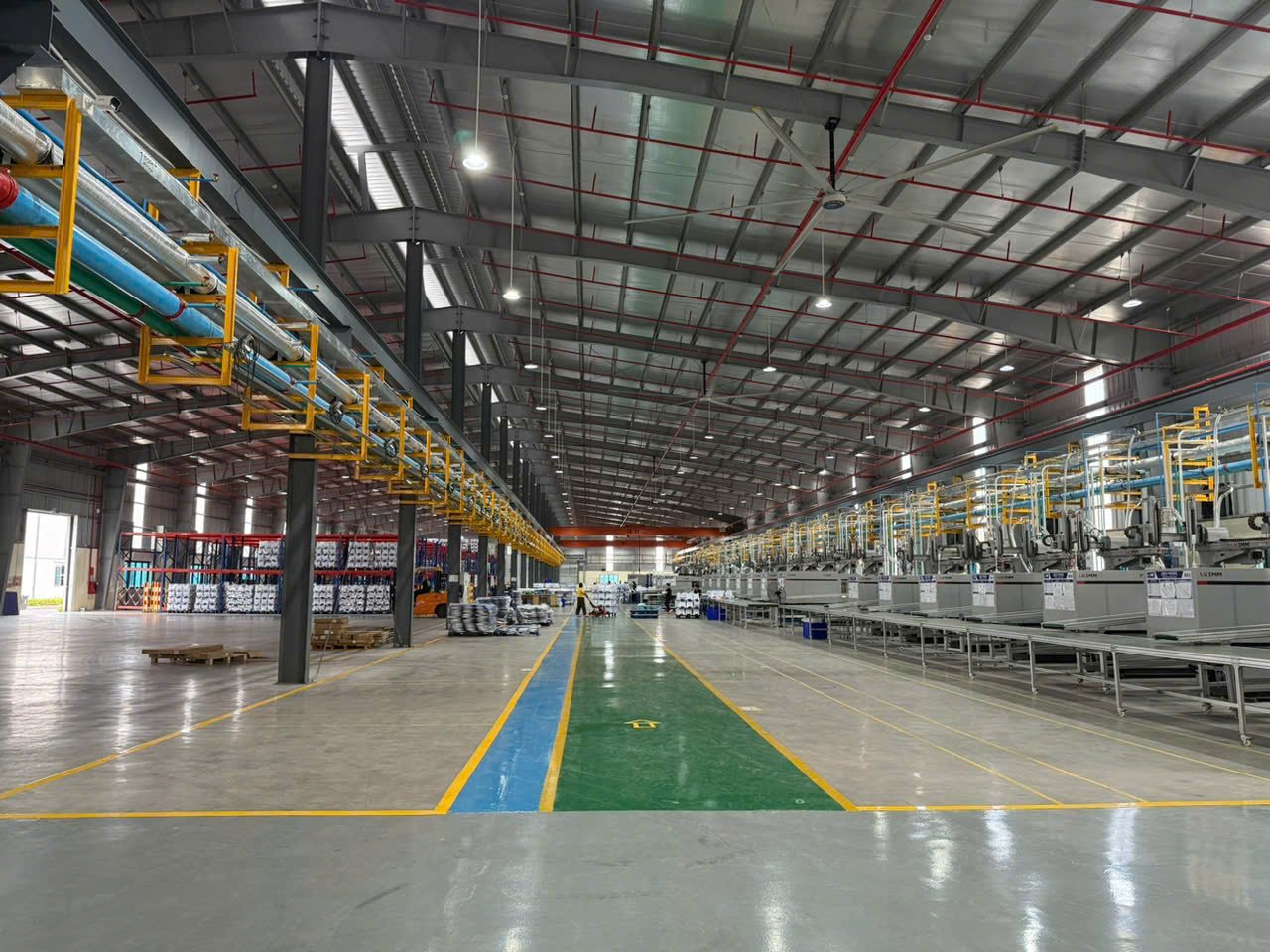
Our manufacturing facilities in Hai Phong and Hung Yen support the production of silicone, rubber, and plastic products.
We work with international brands, importers, and distributors developing customized pet products.
Our capabilities include:
Product Development
Reviewing product concepts, technical drawings, material specifications, and customization requirements.
Tooling and Sampling
Supporting mold development and prototype evaluation before production.
Rubber, Silicone, and Plastic Manufacturing
Producing molded products according to agreed project specifications.
Quality Control
Managing production requirements and quality expectations throughout the manufacturing process.
OEM and ODM Customization
Supporting options such as custom colors, surface textures, molded branding, packaging, and selected product design modifications.
With manufacturing operations in Vietnam and product development resources across Vietnam and China, GHD PET offers customers an opportunity to discuss different production arrangements through one manufacturing network.
For brands implementing a China Plus One strategy, this approach can support manufacturing flexibility while maintaining coordinated product development.
8. What Information Should You Prepare Before Contacting a Vietnamese Manufacturer?
To make the sourcing process more efficient, buyers should prepare a clear product brief.
Useful information includes:
- Product category and intended use.
- Technical drawings, 3D files, or reference samples.
- Preferred material and dimensions.
- Target market and relevant product requirements.
- Estimated order quantities.
- Custom branding and packaging requirements.
- Target delivery schedule.
- Quality and testing expectations.
The more complete the specifications, the easier it is for a manufacturer to assess feasibility and prepare a meaningful quotation.
If a design is still in development, an ODM discussion may be a more appropriate starting point.
9. The Future of Pet Product Manufacturing in Vietnam
As international pet brands continue reviewing sourcing strategies, Vietnam offers another manufacturing option within the global supply chain.
However, the country’s long-term value to buyers will depend on much more than production costs.
Engineering capabilities, product development, manufacturing consistency, transparent supply chains, and reliable quality systems will remain important differentiators.
For manufacturers, this creates an opportunity to move beyond basic contract production and become more involved in product development.
For pet brands, the goal should be to select a partner capable of supporting both present manufacturing needs and future product innovation.
Conclusion: Choosing Vietnam Is Only the Beginning
Vietnam can be an attractive sourcing destination for international pet product brands looking to diversify manufacturing.
But choosing a country is not the same as choosing the right factory.
The most important factors remain technical expertise, material suitability, quality control, manufacturing consistency, and communication.
For brands developing rubber, silicone, or plastic pet products, working with a manufacturing partner that understands these requirements can make the development process more efficient and predictable.
Looking for an OEM or ODM pet products manufacturer in Vietnam?
GHD PET supports international brands with custom pet product development and manufacturing.
Whether you are developing a new rubber dog toy, silicone feeding accessory, or plastic pet product, our team can discuss your specifications and production requirements.
Explore our manufacturing capabilities or contact GHD PET to discuss your next OEM/ODM project.
Website: https://ghdpet.com
Manufacturing: Vietnam | Engineering & Development: Vietnam and China